
“And I will make thee to pass with thine enemies into a land which thou knowest not: for a fire is kindled in mine anger, which shall burn upon you.”
(Jeremiah 15:14)
Fire in Scripture is often a symbol of divine wrath and God’s anger as a consuming blaze against sin. Jeremiah speaks of it here, but so do many other passages: the “fire of God’s wrath” (Ezek. 21:31; 22:31), wrath like fire (Lam. 2:4; Nahum 1:6), and burning anger (Zeph. 3:8).
The sacrificial system made this vivid. The burnt offering (Lev. 1:3-17) and the sin offering (Lev. 4) were roasted over fire, consumed in the flames of the altar. The fire represented God’s wrath against sin, devouring the substitute offering in place of the sinner and pointing forward to the true Lamb who would one day bear that consuming wrath once for all.
When John the Baptist saw Jesus and cried, “Behold the Lamb of God who takes away the sin of the world,” he spoke more than his hearers could yet understand. They knew the lamb of sacrifice, but not yet the glory of the one sacrifice that would end them all (Heb. 10:10).
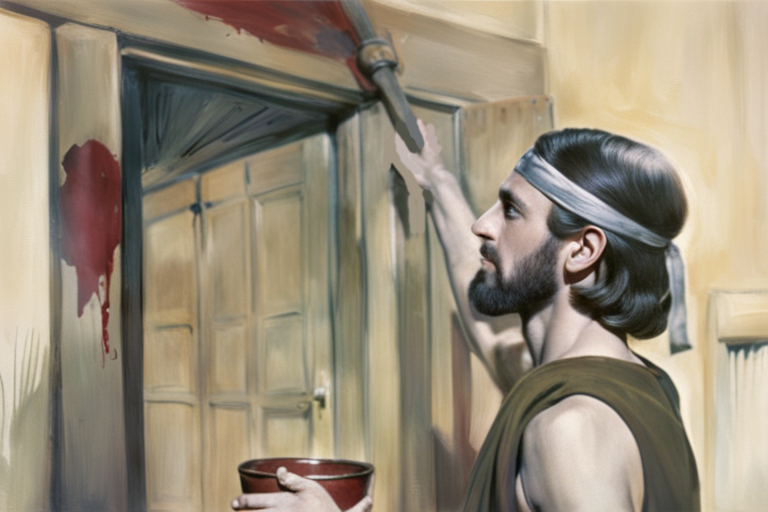
Jeremiah’s words, like the Passover event, point us here. On the eve of their deliverance, Israel killed the appointed lamb, sprinkled the blood on the doorposts, and roasted its flesh to eat in haste (Exod. 12:23). The sprinkled blood shielded them from death; the roasted lamb sustained them for deliverance.
That Passover was a shadow of the greater night when Christ, the true Paschal Lamb, gave Himself. At supper with His disciples he declared, “Take, eat; this is my body” (Matt. 26:26). He later said, “Except ye eat the flesh of the Son of man, and drink his blood, ye have no life in you” (John 6:53).
The Lamb was slain, and on the cross He was exposed to the full heat of divine wrath. “Our God is a consuming fire” (Deut. 4:24; Heb. 12:29). In the sufferings of Christ, the blaze of judgment fell, white-hot and unrelenting. Only He could endure it. Only His sacrifice could satisfy justice. And unless His blood is applied to the heart, the sinner himself must endure that fire forever.
Indeed, to partake of Christ is to be spared, but to reject Him is to face wrath without remedy.
Contemplations:
- Christ our Passover. In the spirit of Passover, Christ is the sacrificed Lamb of God who was butchered and roasted in the fire of God’s wrath, in the hell of His fury. “That the wrath of God, when it is greatly kindled, is extremely fierce, for it is a most dreadful thing to be under God’s wrath when it is once kindled.”[1]
- Wrath as burning. God’s wrath is an expression of His justice burning against sin and must be expiated by the atonement of Christ. Scripture calls it burning (Lev. 10:6; Deut. 32:22; Ps. 21:9), a fire (2 Kings 23:26; Ps. 2:1; Isa. 30:27), hot (Ps. 58:9; Deut. 13:17; Job 20:23), and smoking (Deut. 29:27-28; Ps. 74:1).
- Substitution or judgment. Lord, Scripture makes it clear that either the sinner pays his own wages by suffering the flames of hell forever, or he partakes of Your substitutionary provision in Christ. Either way, justice is satisfied, and holiness is honored.
- Salvation in Christ alone. You have appointed only one way of salvation. “Neither is there salvation in any other: for there is none other name under heaven given among men, whereby we must be saved” (Acts 4:12). Salvation in Christ delivers His people “from the wrath to come” (1 Thess. 1:10). Wrath is inevitable, and when it comes it will consume utterly: “For the great day of his wrath is come; and who shall be able to stand?” (Rev. 6:17).
- Christ’s covenant of peace. How does God save sinners from wrath? Jesus Christ made a covenant of peace (Zech. 6:13), took the form of a servant (Phil. 2:7-8), lived a sinless life (Heb. 4:15), died as sacrifice (Col. 1:20), rose again (1 Cor. 15:15), ascended to the Father (John 20:17), and intercedes now as high priest (Heb. 10:21-22). God’s redemptive plan that Christ fulfilled is the only way we can be saved.
Prayer (thanksgiving)
Lord God Almighty, consuming fire and gracious Redeemer, I thank You for Jesus Christ, the Lamb of God who bore the blaze of Your wrath in my place. I deserve the fire kindled in Your anger, yet He stood in the flame for me. My sins should have been fuel for everlasting burning, but Christ offered Himself as sacrifice to be under the heat of Your judgment until it was fully satisfied.
I thank You that the sacrifices of old—burnt offerings and sin offerings—pointed forward to Him. Every lamb consumed by fire was a shadow of the Lamb who would endure the fury once for all. I bless You that when John cried, “Behold the Lamb of God,” he was pointing to the one sacrifice that would take away sin forever.
I thank You for the blood applied to the doorposts of my heart. Just as Israel was shielded when the Angel of Death passed through Egypt, so I am shielded by the blood of Christ. Death has no claim, for judgment has already fallen. I bless You for this Passover fulfilled in Your Son.
I thank You for the words of Christ at supper: “This is my body.” I thank You for the truth He spoke, that unless I eat His flesh and drink His blood, I have no life in me. And I thank you, Lord, that You have given me life by allowing me to partake of Christ crucified, slain for me and raised for me.
I thank You for the completeness of His sufferings. The full heat of Your wrath fell on Him, leaving none for me. I bless You that the fire which should have consumed me forever is extinguished, quenched in the offering of Christ.
I thank You that salvation is in Christ alone. No other name saves, no other blood atones, no other sacrifice endures the flame. I bless You that He entered into a covenant of peace, that He lived righteously, died willingly, rose triumphantly, ascended gloriously, and intercedes continually.
O Lord, my heart overflows with gratitude. The wrath that should have burned upon me forever has been satisfied. The fire that was kindled against sin has found its fuel in the cross. The Lamb was roasted for me. The sacrifice is complete. Justice is satisfied. Peace is secured.
I thank You for such salvation, full and free, eternal and unshakable. Let my life be spent in thanksgiving, my lips filled with praise, my heart devoted to worship. For Christ has borne the fire, and I have been delivered.
In Jesus’ name I pray, Amen.
Further Scripture References for Jer. 15:14:
Jer. 17:4, Deut. 32:22, Psalm 21:9, Nah. 1:6
[1] Stephen Marshall, Reformation and Desolation, (Crossville, TN: Puritan Publications, 2016) Part 2.
