
“And changed the glory of the uncorruptible God into an image made like to corruptible man, and to birds, and four-footed beasts, and creeping things.”
(Romans 1:23)
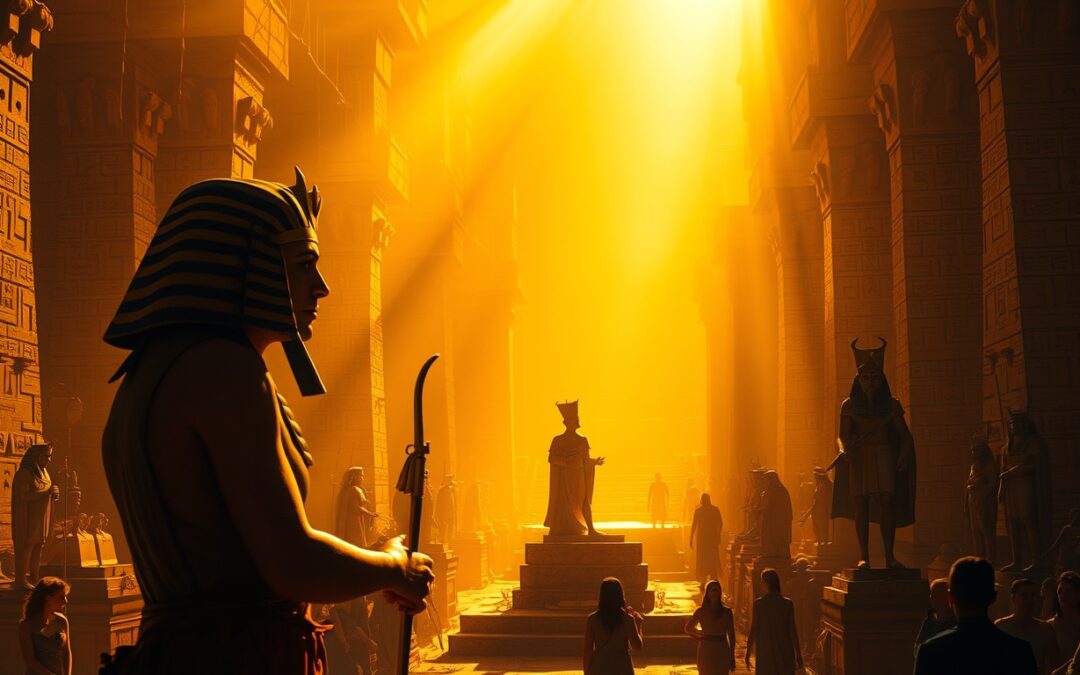
God delivered Israel from Egyptian bondage not only because of what they suffered there as slaves, but also because Egypt was steeped in idolatry. The Egyptians were guilty of the very sin the apostle names in Romans 1:23. They “changed the glory of the uncorruptible God into an image made like to corruptible man, and to birds, and four-footed beasts, and creeping things.” That exchange defines idolatry—glory traded for decay and truth for what can rot.
The Egyptians deified their king. They worshiped the hawk, bowed to the ox, and offered devotion to the crocodile and even the mouse. So God didn’t just free His people from slavery, He removed them from a land full of false gods.[1]
God repeats deliverance again and again in Scripture. In fact, Joshua later lists it among God’s chief mercies to Abraham that He brought him out of Ur of the Chaldeans, where strange gods were served. When God’s people live among idolaters, it is mercy when God transplants them to a place where His Word freely nourishes the soul.
Such mercy is necessary because human nature bends toward idolatry. We want something we can see and touch. We’d rather worship something we can look at, even if it cannot look back. We prefer a god that sits still over a God who speaks and commands.
Yet God is rightly jealous over His glory, demanding that worship be reserved for Him alone. So when His people chose idolatry, it breaks covenant and becomes spiritual adultery. It is also foolish, because it refuses to honor what is living and instead turns to what is dead. Scripture mocks this madness without apology, “eyes that do not see, feet that do not walk, hands that cannot help.” So God is merciful when He delivers His people from such folly.
No sin invokes God’s wrath more than idolatry because worship that replaces God’s Word with human invention trades His glory for something corruptible. This warning still applies because the heart still drifts. And His mercy is still effectual because God still delivers.
Contemplations:
- My exchanges of glory. I see how easily I trade what is eternal for what is manageable. I may not bow to carved images, but I am capable of shrinking God until He fits my comfort level. I confess how often I prefer a god I can predict over the living God who commands me. This passage forces me to face the truth that idolatry is not ancient history; it lives close to my heart.
- The danger of polluted context. I underestimate how much environment influences devotion. Israel observed Egypt’s idolatry before they practiced it. I do the same when I linger among ideas and habits that hinder obedience. I need God’s mercy not only to forgive me but to place me where truth is clear and worship is governed by His Word.
- The seriousness of worship. God does not see worship as a preference. Rather, it is to be given to Him and Him alone. So when worship is directed elsewhere, even with good intentions, it becomes idolatry.
- The folly of returning. I am amazed by Israel’s desire to go back to Egypt, yet comfort and familiarity can make bondage look attractive. I, too, can quickly forget the cost of error once I am free from it. This contemplation urges me to say with Ephraim, “What have I to do any more with idols?”
Prayer (Confession)
Holy God, You are incorruptible, untouched by decay, unmatched in glory. I stand before You knowing that my heart has not always honored You as You deserve. I confess that I have changed Your glory in less obvious ways, shaping You to fit my expectations, trimming Your truth to avoid discomfort. I have wanted a god I could manage instead of worshiping the God who reigns.
I confess my attraction to what can be seen and controlled. I lean toward what feels immediate and familiar. I admit that I have sometimes preferred symbols over obedience, routines over repentance, and comfort over truth. This is not ignorance. It is sin.
But You are merciful to deliver. You brought Israel out of Egypt, and You have brought me out as well, out of darkness, out of false worship, out of distorted views of who You are. I thank You for Your Word that exposes idols instead of excusing them. And I thank You for Your patience with me when I have wandered.
I ask You to cleanse my worship. Strip away every substitute I cling to. Pull down every false image I tolerate. Train my heart to give You what belongs to You alone. Guard me from returning to what once enslaved me.
Teach me to hate idolatry the way You do and make me alert to its subtle forms. Anchor me in reverence that does not bend with pressure or habit because I need Your grace not only to be forgiven but to be kept.
In Jesus’ name I pray, Amen.
Further Scripture References for Romans 1:23:
Psalm 106:20; Acts 17:29; Deut. 4:16; Heb. 2:18
[1] Thomas Watson, A Body of Practical Divinity, (London: Printed for Thomas Parkurst .., 1692), 257–259.
