
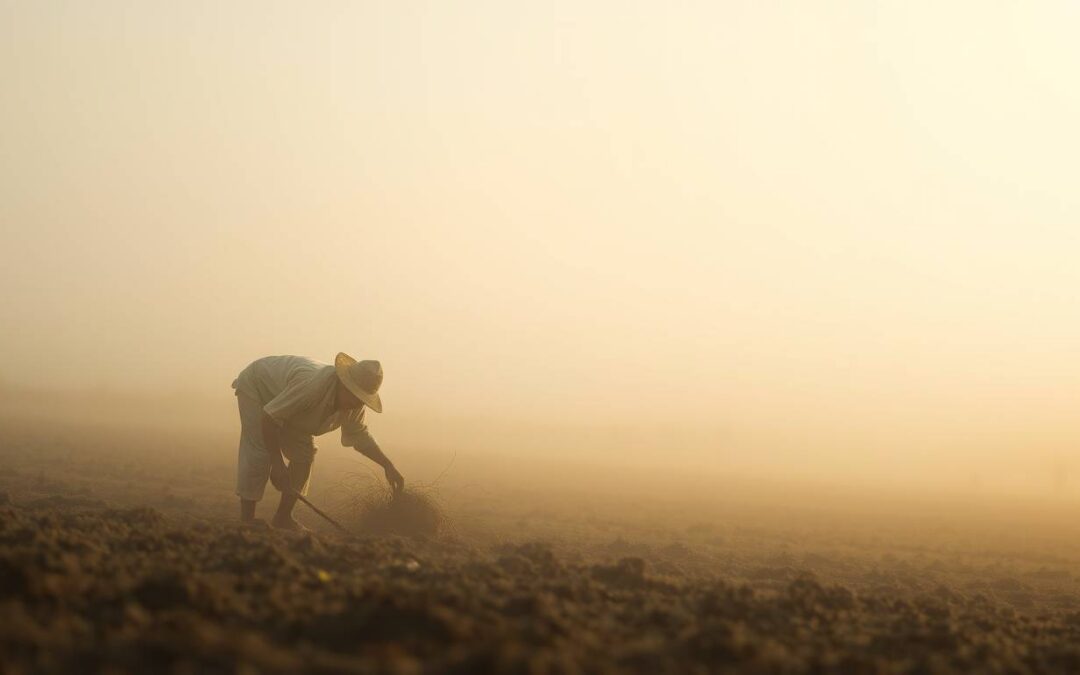
“In the sweat of thy face shalt thou eat bread, till thou return unto the ground; for out of it wast thou taken: for dust thou art, and unto dust shalt thou return.”
(Genesis 3:19)
The sentence pronounced on Adam in Genesis 3 reveals the bitter effects of sin on humanity. Work existed before the fall, but sin brought toil, frustration, weariness, and sorrow into it. The ground would now resist man’s efforts, daily necessities would require much effort, and a life filled with labor would end with the body returning to the dust from which it had been formed. Every aching limb, disappointing harvest, unfinished task, and weary evening bears witness that the world no longer exists in its original perfection.
God appoints work as one of the chief means by which He provides our daily needs. That is to say, our labor does not make His providence unnecessary; rather, it is an instrument of His providence. The Lord gives strength to work, opportunities for employment, skill for particular callings, and success according to His wisdom. Thus, the bread earned through labor remains bread received from His hand.
This principle also applies to spiritual duties. Though eternal life is the free gift of God and cannot be earned by our labor, Christ commands His followers to labor for the food that endures unto everlasting life. Such labor involves earnest attendance to the appointed means of grace, careful obedience to Scripture, resistance against sin, perseverance in prayer, and faithful use of every opportunity to honor God.
Genesis 3:19 reminds every believer that these labors continue until our bodies return to the ground. And so long as life remains, there is work to be done in the callings God assigns. Age, weakness, and changing circumstances may alter the type or amount of labor, but they do not remove the obligation to serve the Lord with the strength we still have.
The words “for dust thou art” also call us to humility. Human beings possess remarkable gifts and may accomplish impressive works, yet our body is still formed from the earth and destined to return to it. Wealth, influence, intelligence, physical strength, and public honor cannot alter this sentence. The most powerful ruler and the most obscure laborer finally lie down in the same dust. The wise person therefore receives present mercies with gratitude while remembering that he is a mortal creature accountable to his Maker.
Death entered the world through transgression and remains an enemy. Yet for those who are united to Christ, death has been transformed. Christ entered death, bore its curse, rose victoriously, and made it the passage by which His people are brought into the immediate presence of their Savior. What sin introduced as judgment, divine wisdom transformed into blessing.
So the prospect of returning to the dust should therefore produce both diligence and hope.[1] There must be diligence because the time for service is limited. Opportunities neglected today may never return. Duties postponed may remain unfinished. The Christian should work while strength and opportunity remain, seeking to be both faithful and steadfast.
But the grave does not possess the final victory. The body returns to dust, but it will not remain there forever. Christ will raise His people in glory, reunite soul and body, and remove every effect of the curse. Until that day, believers are called to labor patiently, endure the sorrows attached to a fallen world, remember their frailty, and trust the Savior who has turned death itself into an entrance into life.
Contemplations:
- Confessing My Spiritual Laziness. I realize that I often want the comforts of spiritual life without the diligent use of the means God has appointed. I can neglect prayer, read Scripture carelessly, ignore self-examination, and resist the effort required to put sin to death. I sometimes excuse this negligence with lack of time or being too tired, while finding energy for less important things. But this passage reminds me that faithful labor is required as long as life remains.
- Remembering That I Am Dust. I can easily feel proud when plans succeed or my work is praised. Yet I need to remember that I was formed from dust, and my body will return to dust. Every capability I possess is temporary, and every earthly accomplishment will soon pass into another’s hands because I am a frail creature upheld every moment by God. I want to accept my strength, health, work, and opportunities as undeserved gifts rather than grounds for boasting.
- Using The Time That Remains. Opportunities that now appear ordinary and ongoing may soon be gone. There are people to serve, duties to complete, sins to forsake, and prayers to offer while life continues. And yet I often postpone obedience as though time and opportunities were guaranteed. May the certainty of death make me more diligent instead of more anxious, and more concerned with faithfulness than with earthly success.
- Resting In Christ’s Victory Over Death. Death is the fruit of sin and would be frightening apart from Christ. Yet my Savior entered the grave and rose again, removing its condemning power for all who belong to Him. I can therefore remember my mortality without hopelessness. When my body returns to dust, my soul will be with Christ, and even that dust remains under His covenant care until the resurrection. The grave is not my final home, for Christ will raise His people and conform them to His glorious body.
Prayer (Supplication):
Gracious Father, give me strength to labor faithfully in every calling You have appointed. Keep me from idleness and bless the work of my hands according to Your wisdom, providing my daily needs.
Keep me constant in prayer, attentive to Your Word, faithful in worship, and serious in the mortification of sin. Do not let me use weariness, distraction, or age as excuses for neglecting communion with You. Give me grace to serve You with whatever strength remains until my earthly work is finished.
Help me remember that I am dust. Humble every proud thought and every false confidence in bodily strength, ability, possessions, or accomplishment. And let the certainty of death make me wise, watchful, and careful in the use of my time.
When work is frustrating, strength is gone, and efforts seem fruitless, keep me from complaining against Your providence. Sustain me with patience and remind me that no faithful service performed for Your glory is forgotten.
Preserve my body and soul according to Your will, use my remaining days for Your honor, and finally bring me into the presence of my Savior. Raise this mortal body in glory at the last day, when every trace of sin and the curse shall be removed forever.
In Jesus’ name I pray, Amen.
Further Scripture References:
Gen. 2:7; Psalm 104:29; Eccl. 12:7; Job 34:15
[1] John Bunyan, An Exposition of the First Ten Chapters of Genesis, vol. 2 (Bellingham, WA: Logos Bible Software, 2006), 439-440.
